Beyond jurisdiction: why EU organisations need accountable domain registrars
A registrar’s legal obligations, abuse response, and ability to cooperate with European authorities should be central to every domain procurement decision.
In our previous article, we examined why a domain registrar’s jurisdiction matters to European organisations. That question becomes urgent when an organisation faces an active phishing campaign, needs registration data for an investigation, or must recover control of a business-critical domain.
At that point, the practical consequences of supplier selection become clear. Who can act? Which legal procedures apply? How quickly can the issue reach someone authorised to resolve it?
For EU public bodies and enterprises, a registrar’s response to those questions should carry more weight than a low annual registration fee.

PKI Under Pressure: Why 2026 Is the Tipping Point for Modernization
Digital trust is becoming more important at the exact moment it is becoming harder to manage. As organisations expand their use of cloud services, machine identities, connected devices and AI, the number of certificates and cryptographic dependencies continues to grow. At the same time, shorter certificate lifecycles are leaving less room for manual processes and fragmented ownership.

Cybercriminals Move in Minutes. The Industry Still Responds in Days
The cybersecurity industry has become exceptionally good at detecting threats, but far less consistent at disrupting the infrastructure that enables them. As cybercriminals automate phishing, malware distribution, and fraudulent online services at unprecedented speed, abuse reporting and escalation processes often remain fragmented, manual, and slow. It's time to rethink how the industry collaborates to reduce cyber-enabled harm.
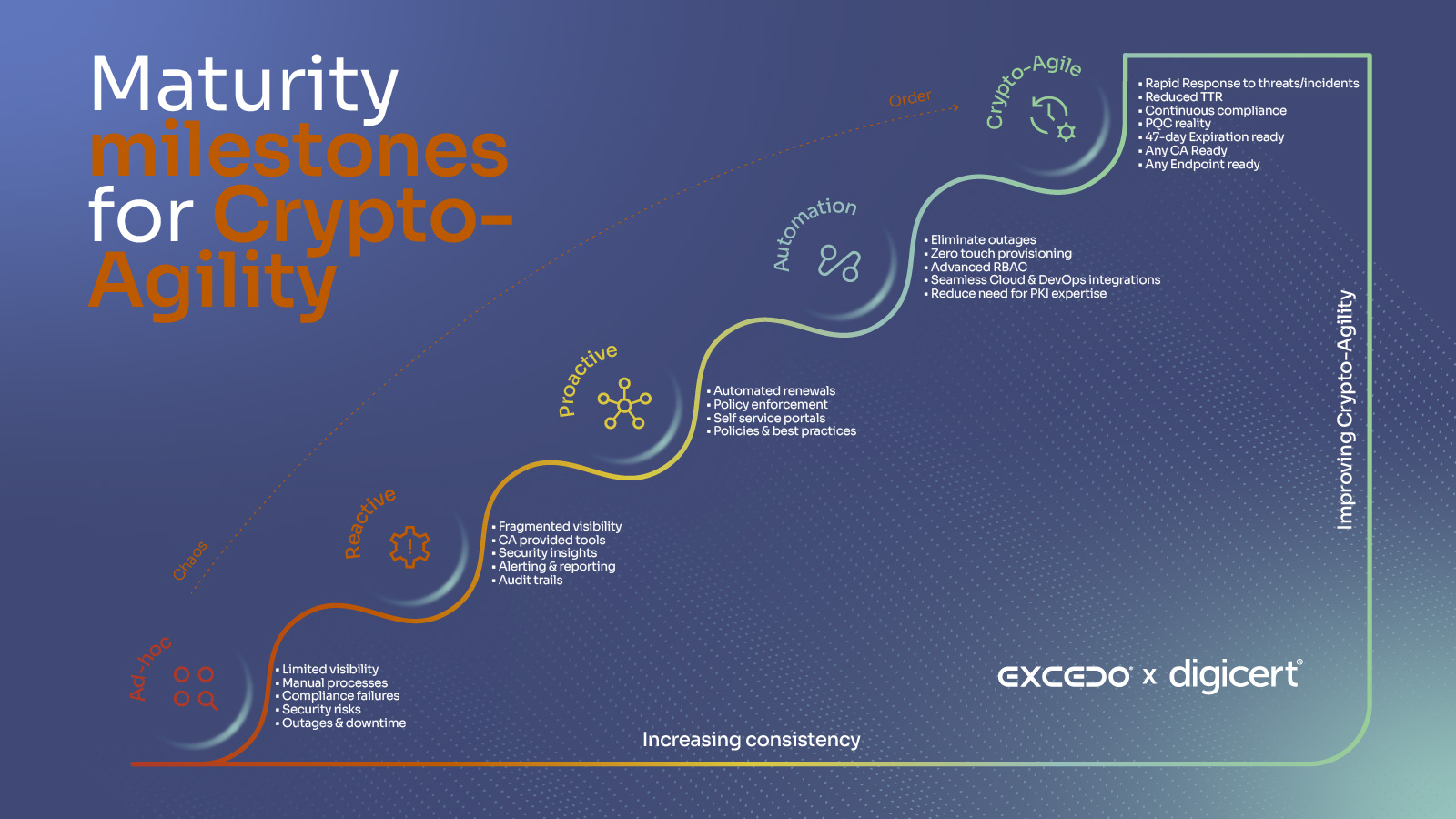
From PKI to Crypto-Agility: Building a Maturity Model for Digital Trust
Digital transformation has dramatically increased the number of identities organizations must secure - users, devices, applications, APIs, and workloads. At the heart of this trust ecosystem lies Public Key Infrastructure (PKI). But PKI alone is no longer enough. As highlighted in Excedo’s perspective on digital trust, certificate automation has become a business imperative, not just an IT improvement. With certificate lifespans shrinking and threats evolving rapidly, organizations must move beyond managing certificates to becoming crypto-agile. This blog explores what crypto-agility means, why it matters, and how organizations can evolve through a structured maturity journey.

Enterprise Guide to protecting Websites, Applications and APIs from threats
In today's digital landscape, a brand's online presence extends far beyond a single website. Enterprises typically maintain numerous digital touchpoints, including multiple websites, mobile applications, web applications, and APIs that connect numerous services and systems. While this digital ecosystem enables efficient operations and enhanced customer experiences, it also presents an expanded attack surface that cybercriminals actively exploit. The cost of such exploitation can be extremely high. Beyond the immediate financial losses of a successful attack, which averaged $4.35 million per data breach in 2022, organisations can also face long-term reputation damage, loss of customer trust, regulatory penalties, and potential legal liabilities if they do not properly protect themselves.

What is a DDoS Attack?
DDoS (Distributed Denial of Service) attacks threaten the availability of essential services and systems worldwide. The first step to protection is to understand what these attacks look like and what vulnerabilities they exploit.

Corporate Address
Jan Stenbecks torg 17
164 40 KISTA
SWEDEN
Quick Links
Resources
About