PKI Under Pressure: Why 2026 Is the Tipping Point for Modernization
Digital trust is becoming more important at the exact moment it is becoming harder to manage. As organisations expand their use of cloud services, machine identities, connected devices and AI, the number of certificates and cryptographic dependencies continues to grow. At the same time, shorter certificate lifecycles are leaving less room for manual processes and fragmented ownership.

Cybercriminals Move in Minutes. The Industry Still Responds in Days
The cybersecurity industry has become exceptionally good at detecting threats, but far less consistent at disrupting the infrastructure that enables them. As cybercriminals automate phishing, malware distribution, and fraudulent online services at unprecedented speed, abuse reporting and escalation processes often remain fragmented, manual, and slow. It's time to rethink how the industry collaborates to reduce cyber-enabled harm.
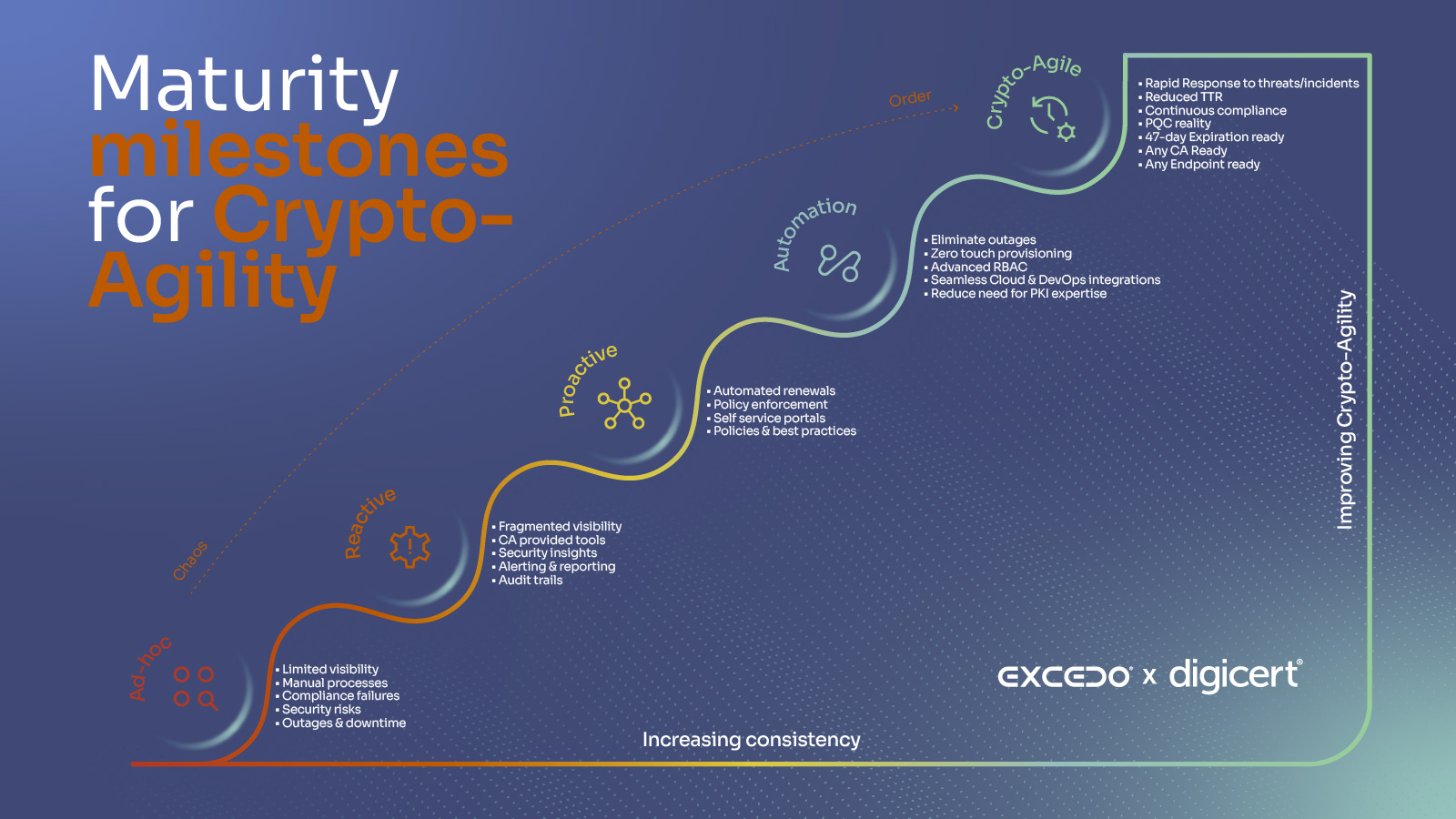
From PKI to Crypto-Agility: Building a Maturity Model for Digital Trust
Digital transformation has dramatically increased the number of identities organizations must secure - users, devices, applications, APIs, and workloads. At the heart of this trust ecosystem lies Public Key Infrastructure (PKI). But PKI alone is no longer enough. As highlighted in Excedo’s perspective on digital trust, certificate automation has become a business imperative, not just an IT improvement. With certificate lifespans shrinking and threats evolving rapidly, organizations must move beyond managing certificates to becoming crypto-agile. This blog explores what crypto-agility means, why it matters, and how organizations can evolve through a structured maturity journey.
Digital Trust Starts with PKI: Why Certificate Automation Is Now a Business Imperative
Digital trust underpins every modern business interaction, from customer-facing services to internal systems and partner integrations. At the core of this trust lies Public Key Infrastructure (PKI) and the certificates that secure communication and verify identities. Yet, as digital environments grow more complex and certificate lifecycles continue to shrink, many organizations still rely on manual management processes. This creates hidden risks that can lead to unexpected outages, security gaps, and operational disruption. For business leaders, this is no longer just a technical concern - it is a matter of resilience, revenue protection, and maintaining customer trust. Automation is rapidly becoming essential to gaining control, reducing risk, and ensuring continuous digital operations.

Why a Robust and Resilient Recursive DNS Is Critical for 100% Uptime
In today’s hyper-connected digital world, every millisecond matters - and so does every moment of downtime. While enterprises invest heavily in application availability, failover systems, and global content delivery, one crucial piece of infrastructure is often overlooked: Recursive DNS (Domain Name System). If your recursive DNS is not robust and resilient, your entire online presence is at risk - even if your servers are flawless. Here is why your business should prioritize a high-availability DNS strategy.

Why Anycast DNS should be part of your NIS2 implementation plan
Anycast DNS provides the online resilience required by the NIS2 Directive. It ensures online resources and services are always available even when attacks do happen by providing multiple routing options that make it possible to filter out malicious traffic.

Corporate Address
Jan Stenbecks torg 17
164 40 KISTA
SWEDEN
Quick Links
Resources
About