Blog
Articles, interviews, and useful tips to help you with everything from starting a Premium Anycast DNS project to securing your organization against cyberthreats.


Articles, interviews, and useful tips to help you with everything from starting a Premium Anycast DNS project to securing your organization against cyberthreats.

Digital trust is becoming more important at the exact moment it is becoming harder to manage. As organisations expand their use of cloud services, machine identities, connected devices and AI, the number of certificates and cryptographic dependencies continues to grow. At the same time, shorter certificate lifecycles are leaving less room for manual processes and fragmented ownership.

The cybersecurity industry has become exceptionally good at detecting threats, but far less consistent at disrupting the infrastructure that enables them. As cybercriminals automate phishing, malware distribution, and fraudulent online services at unprecedented speed, abuse reporting and escalation processes often remain fragmented, manual, and slow. It's time to rethink how the industry collaborates to reduce cyber-enabled harm.
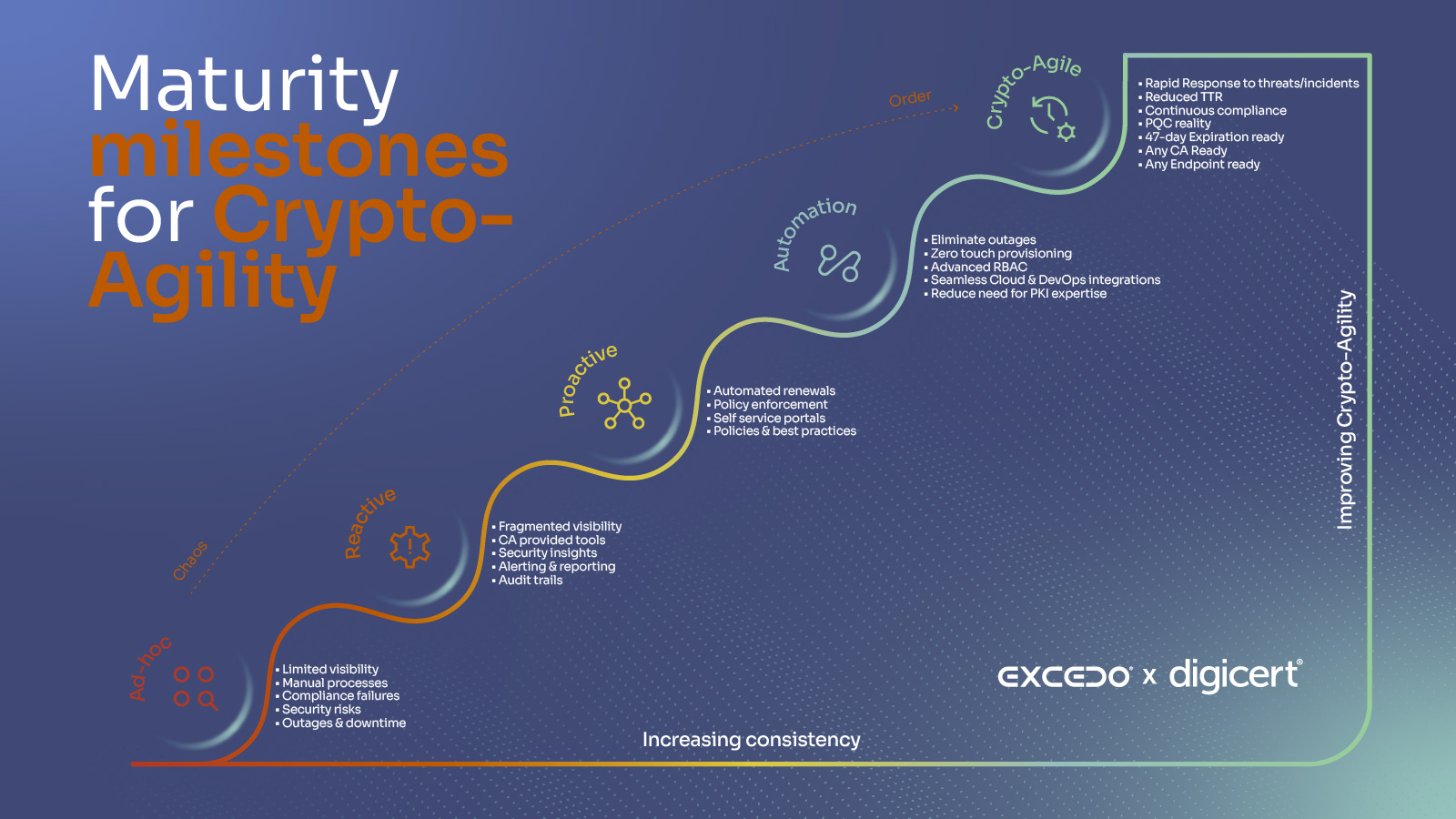
Digital transformation has dramatically increased the number of identities organizations must secure - users, devices, applications, APIs, and workloads. At the heart of this trust ecosystem lies Public Key Infrastructure (PKI). But PKI alone is no longer enough. As highlighted in Excedo’s perspective on digital trust, certificate automation has become a business imperative, not just an IT improvement. With certificate lifespans shrinking and threats evolving rapidly, organizations must move beyond managing certificates to becoming crypto-agile. This blog explores what crypto-agility means, why it matters, and how organizations can evolve through a structured maturity journey.
Digital trust underpins every modern business interaction, from customer-facing services to internal systems and partner integrations. At the core of this trust lies Public Key Infrastructure (PKI) and the certificates that secure communication and verify identities. Yet, as digital environments grow more complex and certificate lifecycles continue to shrink, many organizations still rely on manual management processes. This creates hidden risks that can lead to unexpected outages, security gaps, and operational disruption. For business leaders, this is no longer just a technical concern - it is a matter of resilience, revenue protection, and maintaining customer trust. Automation is rapidly becoming essential to gaining control, reducing risk, and ensuring continuous digital operations.

The cybersecurity landscape has undergone a dramatic transformation in recent years, driven by the rapid advancement of artificial intelligence and machine learning technologies. Traditional network security tools such as firewalls and antivirus software, while still important, are increasingly outpaced by sophisticated, AI-powered threats that can adapt and evolve in real-time. To stay safe in this landscape, organisations need advanced threat intelligence capabilities to identify, prevent, and respond to emerging threats before they can cause significant damage.
The rise of AI in cybersecurity has created a paradigm shift: while AI empowers attackers to create more sophisticated threats, it also enables defenders to develop more effective threat intelligence systems. This dynamic has made threat intelligence an essential component of modern cybersecurity strategy.

In today’s digital world, email remains one of the most widely used - and most targeted - communication channels. To combat rising threats like phishing, spoofing, and spam, Microsoft Outlook is rolling out new authentication requirements for high-volume senders (defined as those sending over 5,000 messages per day). These changes aim to create a more trustworthy and secure email ecosystem.

In today's digital landscape, a brand's online presence extends far beyond a single website. Enterprises typically maintain numerous digital touchpoints, including multiple websites, mobile applications, web applications, and APIs that connect numerous services and systems. While this digital ecosystem enables efficient operations and enhanced customer experiences, it also presents an expanded attack surface that cybercriminals actively exploit. The cost of such exploitation can be extremely high. Beyond the immediate financial losses of a successful attack, which averaged $4.35 million per data breach in 2022, organisations can also face long-term reputation damage, loss of customer trust, regulatory penalties, and potential legal liabilities if they do not properly protect themselves.

DNSSEC is an essential feature for ensuring the integrity and security of your online presence. Without it, you expose your users to fraud and risk your organisation’s reputation. However, implementing DNSSEC can be complicated, especially for large domain portfolios with thousands of domains.

One of the biggest online vulnerabilities for organisations today is lack of control of their digital assets, which leaves the doors open for all kinds of abuse, including brand impersonation and domain takeovers. The consequences of this, both to brand reputation and finances, can be severe. But there is an easy way to prevent this - proper management.

Google has made email branding more accessible for organisations of all sizes by introducing Common Mark Certificates (CMC) as an alternative to Verified Mark Certificates (VMC) for BIMI implementation. This change allows organisations to display their logo in Gmail inboxes without the need for trademark registration, significantly reducing the cost and complexity of enhanced email security.

Taking down an abusive domain is not as simple as it may appear. You can always report abuse, but this does not always mean the domain will be taken down or preventive actions will be taken to avoid further abuse. An expert ensures the many challenges that can arise in the process are dealt with quickly and efficiently to protect your brand.

Setting up a DMARC policy is not a one-time task. To stay safe from threats in the long-run, organizations need to continuously manage their DMARC policy to ensure all domains are covered and properly protected. Just as organizations continuously change and evolve, so must DMARC.

The impact of AI across industries is undeniable and it will only grow as AI develops further. However, just as AI has the potential to increase the efficiency of many processes and tasks, it can also increase the efficiency and scale of cyberattacks. To stay protected, security must adapt to these evolving threats.

Domain registrars that allow domains to be registered without any kind of identification required make it very easy for cybercriminals to commit crimes in complete anonymity. Unfortunately, there are many of these rogue registrars around and they are endangering businesses and people by not implementing industry standards and best practices.

The NIS2 Directive places new requirements on domain name registrars to get accurate information on registrants in order to minimise the anonymity that enables cybercrime.

BIMI (Brand Indicators for Message Identification) is a way to quickly show email recipients that emails actually originate from your organization. It allows you to add your brand logo to all outgoing emails so recipients can trust that they come from you and not a malicious third party.

Excedo's mission has always been to protect businesses and people online. This requires a holistic approach covering everything from email security and domain management to threat intelligence.

The requirements of the NIS2 Directive are extensive and address many different aspects of digital security, including email security. For organizations to meet the email security standards set by NIS2, they need a correctly configured DMARC policy.

Anycast DNS provides the online resilience required by the NIS2 Directive. It ensures online resources and services are always available even when attacks do happen by providing multiple routing options that make it possible to filter out malicious traffic.

Implementing a DMARC policy for very small organizations is not too complex. Generally, one just needs to ensure it is implemented correctly for a single domain. However, for larger organizations, with multiple domains and email systems, it is much more complicated.

The NIS2 Directive will raise digital security levels across the EU. Although its jurisdiction spans across borders, individual countries have a say in how the requirements will be implemented locally and if they want to go above and beyond the security baseline set by NIS2.

DDoS (Distributed Denial of Service) attacks threaten the availability of essential services and systems worldwide. The first step to protection is to understand what these attacks look like and what vulnerabilities they exploit.
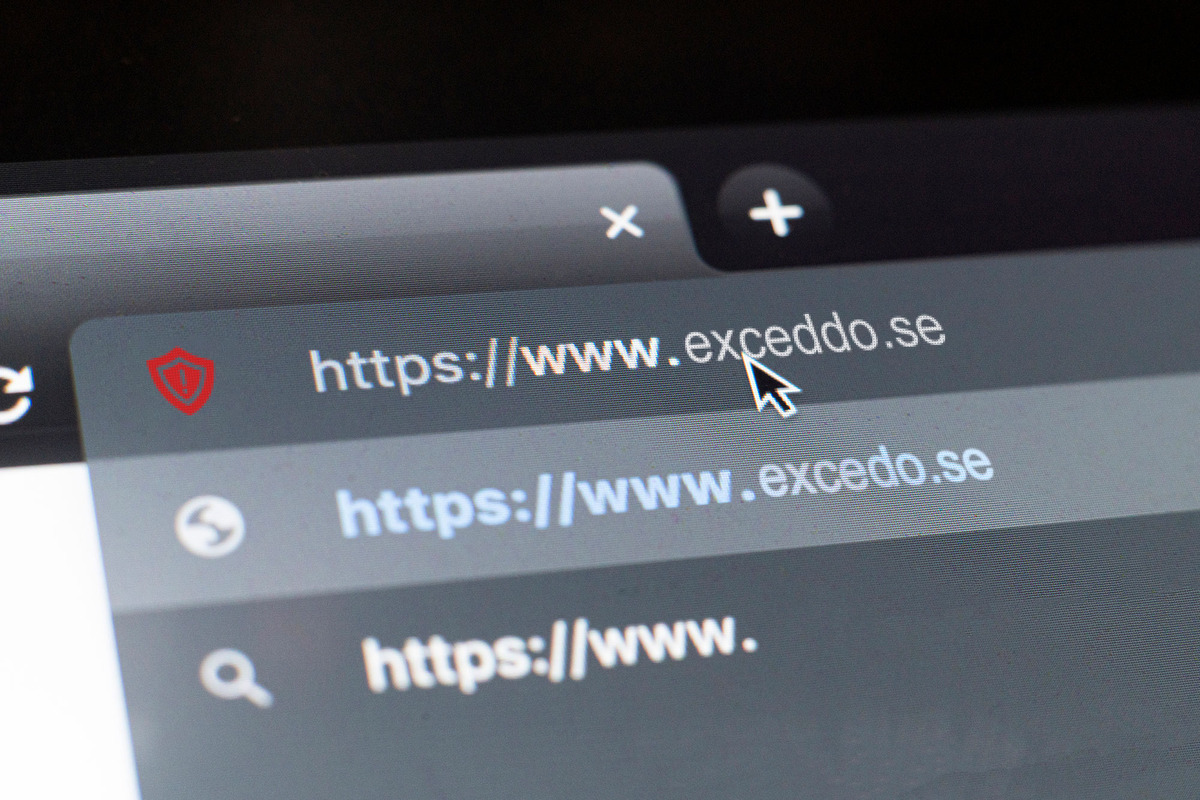
There are many reasons to secure and closely control your digital IP. An important reason is to protect your organization from online brand abuse, where malicious third parties use your brand name to commit fraud.

The default settings of most major email providers have for a long time not been enough to stop email threats from reaching inboxes. But that is now changing with Google and Yahoo's new email security requirements, including the mandatory implementation of DMARC.

Jan Stenbecks torg 17
164 40 KISTA
SWEDEN